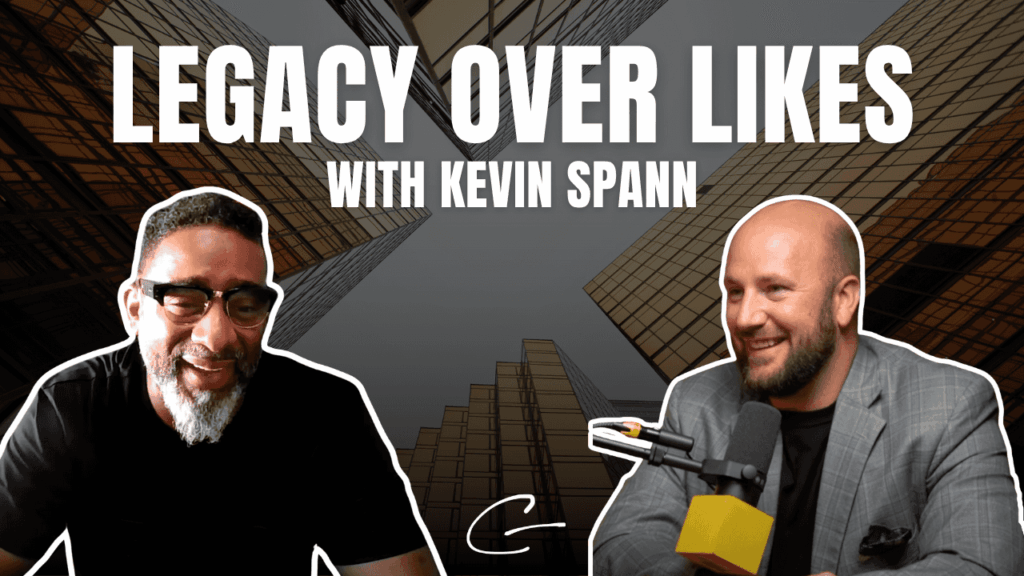
If you’ve spent any time in the insurance world, you’ve probably heard the name Kevin Spann — known as The Insurance Guru for good reason. In this episode of The Sales Factory, I sat down with Kevin to talk about something most entrepreneurs ignore: building a business legacy that outlasts the next quarter and endures for the next generation.
We didn’t talk about viral posts or vanity metrics. We talked about the real stuff — discipline, consistency, relationships, and what your bank account actually says about who you are as a leader.
What Does Building a Business Legacy Really Mean?
Building a business legacy isn’t about building a big company. It’s about building a company that matters — one that serves your family, your team, and your community long after you step away from the day-to-day. It’s about playing the long game when everyone around you is chasing short-term dopamine hits on social media.
Kevin and I both stand by this hard truth: your results don’t lie. The number in your bank account this morning? That’s a mirror. It reflects your habits, your consistency, your network, and the promises you’ve kept — or broken.
This isn’t about shame. It’s about clarity. Once you accept that your current results are a direct reflection of your past actions, you take ownership of your future. That’s where legacy starts.
Why Likes Don’t Build Lasting Businesses
Kevin made a point on the show that stuck with me: a lot of entrepreneurs are building for attention when they should be building for impact. Likes fade. Followers fluctuate. Viral moments come and go. But the relationships you build, the promises you keep, and the lives you change — those compound forever.
According to SCORE research, small businesses that focus on community impact and customer relationships have significantly higher survival rates than those focused purely on growth metrics. Legacy businesses don’t just last longer — they grow healthier.
I see it constantly in my work at Carroll Media with over 10,000 clients: the ones who build for long-term brand equity outperform the ones chasing quick wins every single time.
5 Principles for Building a Business Legacy
1. Discipline Over Motivation
Motivation is a feeling. Discipline is a system. The entrepreneurs who build legacies show up on the days they don’t feel like it. They follow the process when nobody’s watching. They do the boring, unglamorous work that compounds over years, not days.
2. Keep Every Promise You Make
Your reputation is built on the promises you keep — to clients, to employees, to your family. Break enough of them and no amount of marketing will save your business. Keep them consistently and you’ll build the kind of trust that money can’t buy.
3. Invest in Relationships, Not Transactions
Kevin’s entire career is proof that relationships outlast transactions. The clients who refer you, the partners who stick with you, the team members who bleed for you — those are built through genuine investment in people, not through sales tricks. Mentorship and real relationships are the foundation of every legacy business.
4. Build Systems That Outlive You
A business that depends entirely on you isn’t a business — it’s a job with extra liability. Build SOPs, train your team, deploy technology, and create an operation that runs whether you’re in the office or on the beach. That’s how you create something worth passing down.
5. Define Your Non-Negotiables
Every legacy builder I’ve met has a set of principles they won’t compromise — no matter the deal, no matter the pressure. Kevin has his. I have mine. Those non-negotiables are your compass when the market gets chaotic and the temptation to cut corners gets loud.
Legacy Is the Ultimate Competitive Advantage
Here’s what most people miss: building a business legacy isn’t just noble — it’s profitable. Companies with strong reputations command premium prices. They attract better talent. They retain customers longer. They weather economic storms because their foundation isn’t built on hype — it’s built on substance.
Kevin Spann gets this. The man has built a career in insurance — not the sexiest industry on paper — and turned it into a legacy that inspires thousands. That didn’t happen because he went viral. It happened because he showed up every single day and did the work that matters.
Stop chasing shortcuts. Start building something that lasts. That’s the play.
Frequently Asked Questions
What does building a business legacy mean?
Building a business legacy means creating a company built on strong values, lasting relationships, and systems that endure beyond the founder. It prioritizes long-term impact over short-term metrics, focusing on reputation, community, and generational value.
Why are likes and followers not enough for business success?
Likes and followers are vanity metrics that don’t reflect business health. Real success is measured in customer retention, revenue growth, referral rates, and community impact. Businesses built on attention alone collapse when the algorithm changes or trends shift.
How do discipline and consistency build a business legacy?
Discipline ensures you show up daily regardless of motivation. Consistency compounds results over time — in reputation, relationships, and revenue. Together, they build the trust and reliability that define legacy businesses and separate them from short-lived ventures.
What are non-negotiables in business?
Non-negotiables are core principles you refuse to compromise regardless of circumstances — ethical standards, quality commitments, how you treat people, and what you stand for. They serve as your compass during difficult decisions and define your brand’s character.
How do I start building a legacy business today?
Start by defining your non-negotiable values, then build systems and relationships that reflect them. Invest in people over transactions, create SOPs that allow your business to operate independently, and focus on long-term customer impact rather than short-term revenue spikes.